On restraint
What Vincent Van Duysen's quiet houses teach about the discipline of leaving things out — and the one layer that could carry them past sunset.
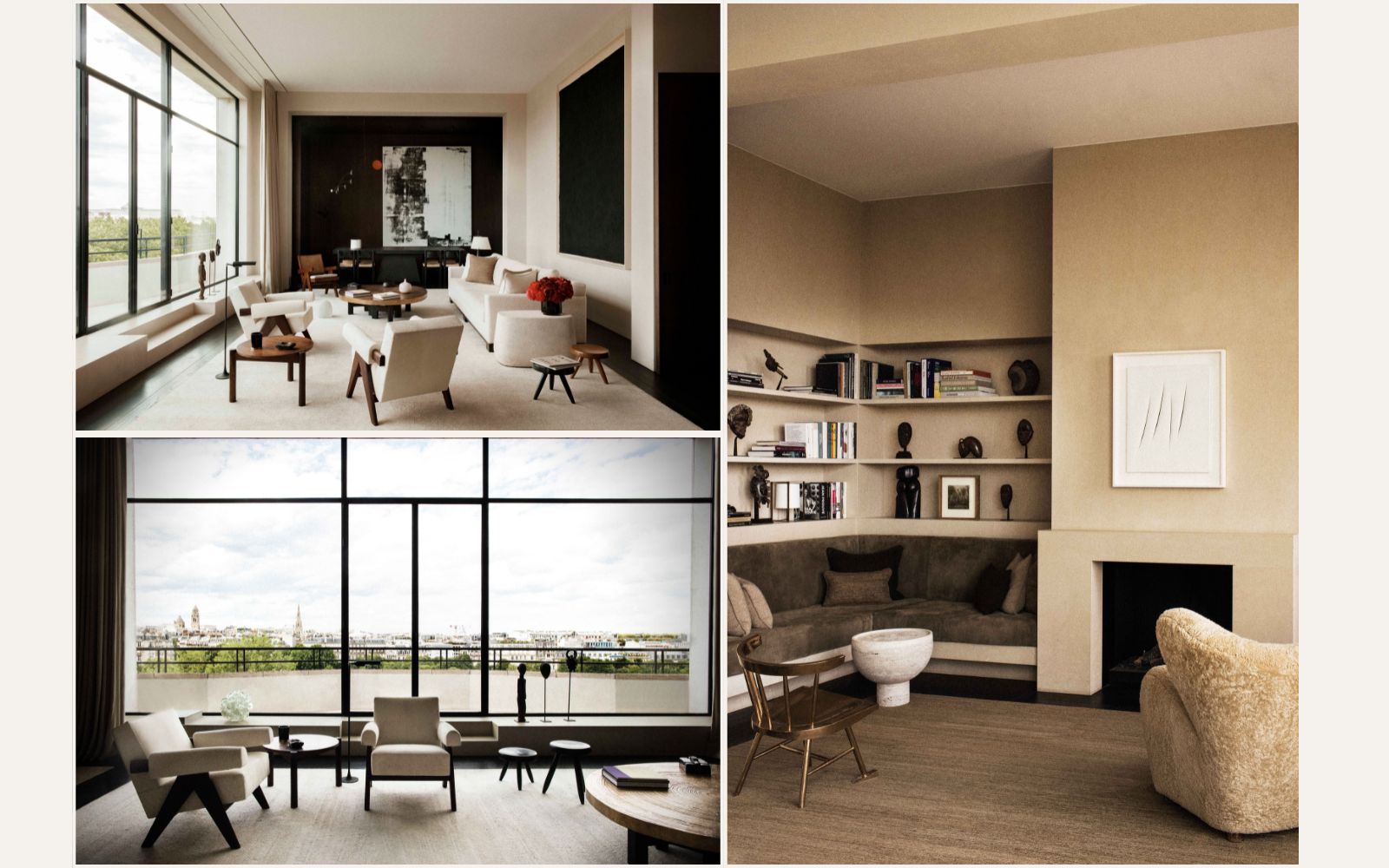
There is a difference between a room that is empty and a room that is restrained, and the difference is the entire body of work of Vincent Van Duysen.
I keep returning to his houses when I want to recalibrate my own. They are difficult to look at quickly. The first glance gives you pale plaster, an unadorned volume, a single piece of furniture holding the room — and the instinct is to read minimalism and move on. The instinct is wrong. What Van Duysen practices is not minimalism. It is restraint. The two words are not synonyms, and the difference is the lesson.
I want to think out loud about that here — and about a single observation I would offer if I were sitting at a table with him.
The proportional logic underneath everything
The first thing to register, in any Van Duysen interior, is that nothing is arbitrary.
The window is the size it needs to be. The threshold between rooms is the exact width that lets the eye complete the connection without forcing it. The ceiling height is calibrated to the volume below it. The doorway aligns with the centerline of the room beyond. There is a geometric argument running underneath every photograph of these interiors, and the argument is what makes the room feel inevitable instead of staged.
This is the part of his work that is least discussed and most worth studying. You can copy a plaster wall. You cannot copy proportion.
Material vocabulary kept honest
The palettes are narrow on purpose. Lime plaster, smoke-toned oak, raw stone, linen, leather aged to a color you cannot order from a swatch. Each material is allowed to be itself. There is no faux finish, no decorative paint trick disguising one material as another. The plaster looks like plaster. The wood looks like wood.
This is what I mean when I write about material truth. A surface that admits what it is reads more luxurious than any number of applied finishes pretending to be something they are not. Van Duysen’s rooms are case studies in that argument.
The discipline of leaving things out
Restraint is not the absence of decisions. It is the result of having made ten more decisions than the visible result, and having taken nine of them out.
That is the version of minimalism that earns the word elegant. It is not about owning fewer objects. It is about a designer with the confidence to leave a wall empty when the wall is the point.
This is also the part of the practice most easily faked and most often done badly. A bare room without proportional discipline is not restraint — it is poverty of vision pretending to be sophistication. The difference is visible in seconds, even if it takes years to articulate why.
A note about the after-dark layer
Now the small observation I would actually make if the conversation allowed it.
Van Duysen’s houses are designed almost entirely around natural daylight, and that is a strength most residential design under-respects. The volumes are shaped to accept light. The materials are chosen to register it. The published photography, for which the work is justly celebrated, shows these rooms in their best light — and that light is, almost always, the sun.
The after-dark plan, in many of those projects, is itself an exercise in restraint. A floor lamp. A table lamp. Sometimes a pendant. Beautiful objects, often vintage, dimmed low. It is the same discipline applied to the night — minimum elements, maximum grace.
What I would offer is not a critique of that minimum. It is an observation that the minimum, in his work, already does so much that an additional layer — done with the same restraint — could let the rooms hold their full character past sunset. Not more fixtures. Not more visible light. A concealed cove for ambient. A quiet recessed task source where the eye actually works. An accent picking up the same plaster, oak, and stone the daylight already loves, continuing their conversation into the evening.
What the published photography does not show is what the room is on a Tuesday in February at 9 p.m. The decorative lamp lights itself, and a generous radius around it. The proportional intelligence of the room — the wall that earned its emptiness, the threshold calibrated to the eye — recedes into the dim. A layered plan, applied with the same restraint that earned the wall its emptiness, would let the room keep all of itself after sunset.
This is not a correction. It is the conversation I would have with a body of work I admire — the kind you only earn by spending years trying to get to the same place.
The take-away
Restraint is a discipline. It is the willingness to make ten decisions and publish one of them. It is the proportional intelligence that makes the empty wall feel inevitable.
In residential work, that discipline has a counterpart most often left undeveloped: a lighting layer that respects the same logic. The same restraint that earned the wall its emptiness can earn the room its night.
If you would like to talk about how to apply this kind of restraint to a residential project — without losing the layered lighting that makes it livable after dark — write to me directly.
Selected projects by Vincent Van Duysen Architects can be viewed at vincentvanduysen.com. All credit to the original studio and project photographers.