What the Italians taught me about light
Notes from an afternoon at PUC Minas Lourdes, speaking on light as intention rather than infrastructure.
Most lighting talks I have sat through could have been delivered in any room. Slides about lumens, slides about temperature curves, slides about the latest LED chip — content that does not notice where it is standing.
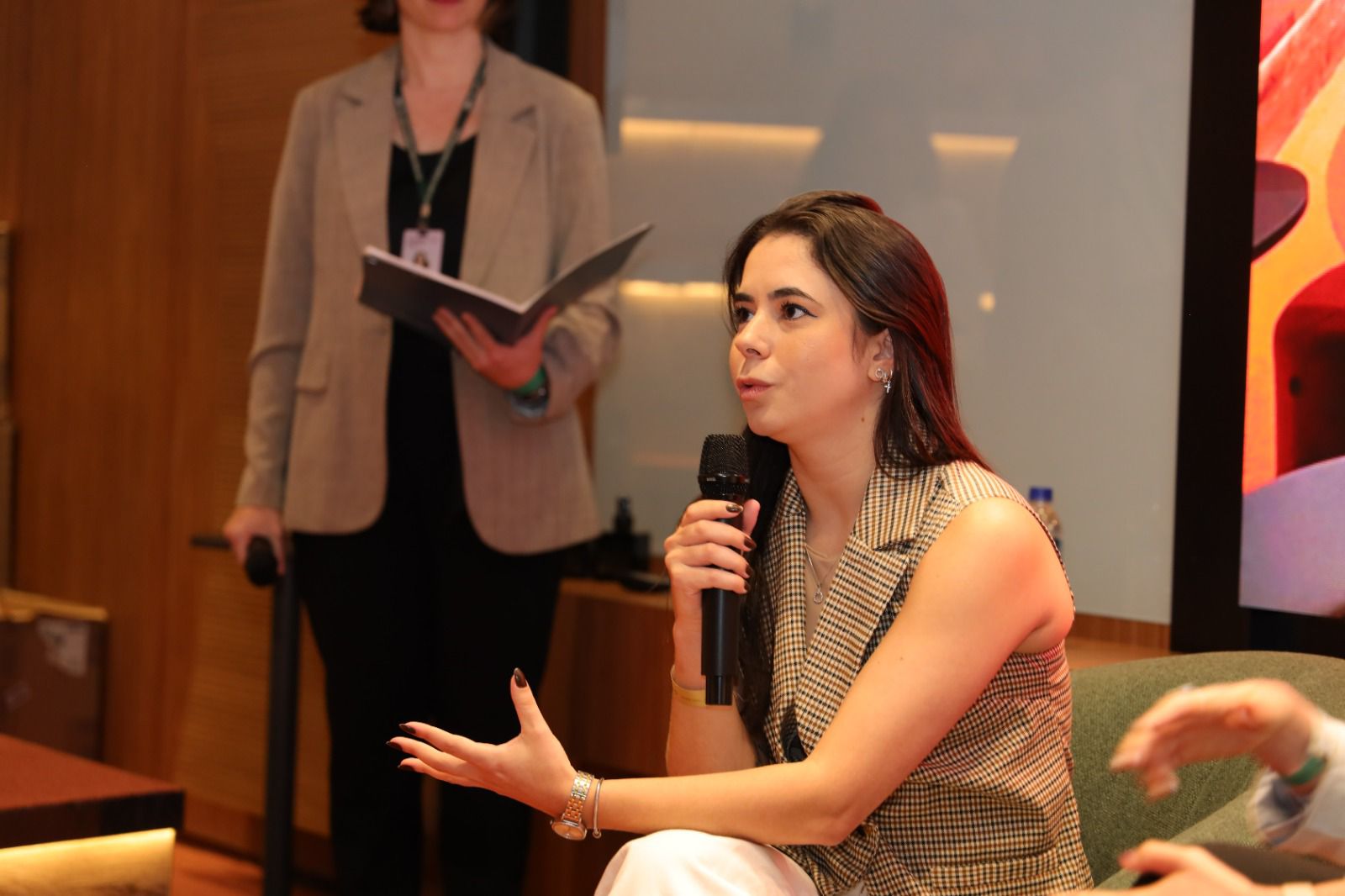
The afternoon of April 13th was not that kind of talk, and the reason was the building.
The Consulate of Italy in Belo Horizonte organized the conversation for Italian Design Day and the Giornata del Made in Italy, with support from CASACOR Minas. The host venue was PUC Minas Lourdes — a 1940s Art Deco building designed by the Italian architect Raffaello Berti — and the audience was the school’s own architecture and urbanism students. To speak about light inside a Berti building, in front of the students who walk those halls every week, is to inherit a standard before you open your mouth. Nothing you say is allowed to be casual.
I went in representing the firm I coordinate at — a specialized lighting practice in Brazil where I lead the architecture and lighting design team — and I went in with a thesis I had been refining for months. It is the thesis I want to leave here, because it is the spine of how I think about what we do.
Italy did not invent light. Italy learned to respect it.
That is what I tried to argue, in front of a room of students and practitioners and Stefania Leone, my fellow lighting designer on the panel, whose own talk made the case from a different angle and made mine sharper by contrast.
The argument
A lamp is not a lighting project. A specification list is not a lighting project. Even a beautifully executed circuit plan, with the right wattage on the right circuit, is not a lighting project.
A lighting project begins much earlier — in a decision about what the room is for, and how a body is supposed to move through it across the hours of a day. The fixture is the last thing chosen, not the first.
What the Italians have done — and what their best manufacturers continue to do, from Flos to Artemide to Viabizzuno — is to compress that intention into the product itself. The fixture arrives already knowing what it is for. The beam angle is a decision. The finish on the housing has a relationship with the wall it will live on. The driver is sized for the lumens the room actually needs, not the lumens the catalogue defaults to.
You can tell, holding the piece in your hand, that someone upstream of you already thought about the room.
This is what I tried to bring back. Not the aesthetic. The discipline.
The example I showed
I walked the students through a small piece of my own work — an office where we used tunable white luminaires to follow a circadian curve across the day. Warmer in the early morning. Neutral at midday. Warmer again as the sun fell.
Not as a novelty. As the simplest possible application of a single principle: the light should know what time it is. The body knows. The lamp should keep up.
What I did not say in the room
A country with our sun should be the best in the world at this.
Brazil has more daylight than almost any developed market, and we treat it as decoration. We design rooms that fight their own windows. We specify fixtures that flatten the very thing the climate gave us for free.
The Italian discipline is not a foreign import for us. It is a corrective to a bad habit we have grown comfortable with.
The part I will keep
The exchange with the students afterward was the part of the afternoon I will keep. Architecture students ask the questions paying clients have learned not to ask. They want to know why a thing is done, not whether it is fashionable. They want the principle, not the trend.
By the time we left the building, the conversation had moved from light into something larger — into how a young architect decides which standards are worth carrying through a career, and which ones can be discarded without losing anything.
If there is a next edition, I hope it stays in a room like that one. The building teaches half the lesson before the speaker says anything.
With thanks to the Consulate of Italy in Belo Horizonte, to CASACOR Minas, to PUC Minas, to Stefania Leone, and to the students who stayed for the conversation that mattered.
If you are building a practice that takes light seriously — or hiring someone to lead that work for you — write to me at [email protected].